

Choosing a reconstitution solvent is a small decision with an outsized effect on how long a research peptide remains usable. The two most common options — bacteriostatic water and sterile water — differ in one important way that shapes multi-use laboratory workflows. This guide compares them and explains when each is appropriate. It is written for qualified researchers and makes no human-use, therapeutic, or dosing claims.
Because solvent choice directly influences the reconstituted stability window, it deserves deliberate attention rather than defaulting to whatever is on hand. The sections below define each solvent, compare them, and outline how to choose.
What Is Bacteriostatic Water?
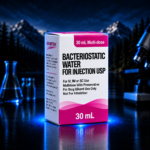
Bacteriostatic water is sterile water that contains a bacteriostatic preservative — most commonly 0.9% benzyl alcohol. The preservative inhibits the growth of bacteria after the vial is opened, which allows multiple withdrawals from a single vial over a period of up to about 28 days. This makes bacteriostatic water the preferred solvent for reconstituting lyophilized research compounds in multi-use laboratory protocols, where a vial is accessed repeatedly across a study.
What Is Sterile Water?
Sterile water (such as sterile water for injection in research contexts) is purified water that has been sterilized but contains no preservative. Because it lacks antimicrobial protection, it is generally intended for single use: once opened, it does not resist microbial growth the way bacteriostatic water does. Sterile water is chosen when a preservative-free solvent is specifically required or when material will be used immediately and not stored for repeated access.
Key Differences
Preservative Content
The defining difference is the benzyl alcohol preservative in bacteriostatic water, which sterile water lacks. This single distinction drives the differences in usable window and appropriate use case.
Multi-Use vs Single-Use
Bacteriostatic water supports repeated withdrawals from one vial over roughly 28 days; sterile water is better suited to single-use scenarios because it offers no ongoing microbial protection.
Effect on Stability Window
Because bacteriostatic water limits microbial growth, reconstituted material generally has a longer practical usable window with it than with preservative-free sterile water, all else being equal.
How to Choose
- Choose bacteriostatic water for most multi-use reconstitution, where a vial is accessed repeatedly over days or weeks.
- Choose sterile water when a preservative-free solvent is specifically required, or for immediate single use.
- Check compatibility with the specific compound and any documented solvent recommendation.
- Match volume to concentration goals, as covered in the reconstitution-volume guide.
Practical Handling Notes
Regardless of solvent, sterile technique matters at every withdrawal: wipe the stopper, use a clean needle, and keep the vial sealed between uses. Add the solvent gently along the vial wall rather than directly onto the lyophilized material, and avoid vigorous shaking, which can stress the peptide. Store the reconstituted vial refrigerated and protected from light, and track the reconstitution date so the usable window is monitored.
Benzyl Alcohol: What It Does and Does Not Do
The benzyl alcohol in bacteriostatic water is a bacteriostatic agent, meaning it inhibits the growth of bacteria rather than sterilizing an already-contaminated solution. This distinction matters: bacteriostatic water preserves the sterility of a properly handled vial across repeated withdrawals, but it is not a substitute for sterile technique and cannot rescue material that has been contaminated through careless access. Understanding this keeps expectations realistic and reinforces why clean withdrawal practice remains essential even when a preservative is present.
Common solvent-selection mistakes follow from misunderstanding this role. Choosing preservative-free sterile water for a vial that will be accessed many times over weeks invites microbial growth, while assuming bacteriostatic water makes technique optional invites the same outcome by a different route. The reliable approach is to match the solvent to the workflow — bacteriostatic water for multi-use access, sterile water when a preservative-free solvent is specifically required — and to maintain sterile technique regardless. Checking any compound-specific solvent recommendation before reconstituting avoids the rarer case where a particular compound calls for a specific diluent.
A Sterile Technique Checklist for Reconstitution
Because even the best solvent choice cannot compensate for careless handling, sterile technique deserves a defined routine at every reconstitution and withdrawal. A practical checklist keeps the essentials consistent. Before starting, work in a clean area and gather sterile supplies. When reconstituting, wipe the vial stopper with an appropriate disinfectant, draw the correct volume of solvent, and add it gently along the inside wall of the vial rather than directly onto the lyophilized material, which reduces mechanical stress on the compound. Allow the material to dissolve without vigorous shaking, swirling gently if needed.
The same discipline applies to every subsequent access. Wipe the stopper before each withdrawal, use a fresh clean needle, avoid touching the stopper surface, and reseal the vial promptly. Between uses, store the vial refrigerated and protected from light, and never leave it open on the bench. These steps matter because the benzyl alcohol in bacteriostatic water is bacteriostatic, not a cure for contamination — it preserves the sterility of a properly handled vial but cannot rescue one that has been compromised. Following a consistent technique checklist ensures that the preservative does its job across the full multi-use window, keeping the reconstituted solution suitable for research throughout its intended lifespan and protecting the reproducibility of the work that depends on it.
Summary: Key Takeaways for Researchers
The solvent choice comes down to whether repeated access is needed. The essential points are:
- Bacteriostatic water: contains 0.9% benzyl alcohol, supports multi-use access over roughly 28 days.
- Sterile water: preservative-free, better suited to single use.
- Stability effect: bacteriostatic water generally gives a longer practical usable window.
- Default: most multi-use reconstitution uses bacteriostatic water unless a preservative-free solvent is specifically required.
Matching the solvent to the workflow — multi-use versus single-use — is a simple way to protect both compound integrity and experimental reproducibility.
Related Research Guides
- Calculating Reconstitution Volumes
- How Long Do Reconstituted Peptides Last?
- Reconstitution Water
- Research Hub
Research Use Only. The materials referenced here are intended strictly for laboratory research by qualified professionals. They are not FDA approved and are not for human or animal use. Nothing in this article constitutes medical, therapeutic, or dosing guidance.
Frequently Asked Questions
Bacteriostatic water contains a preservative (usually 0.9% benzyl alcohol) that inhibits bacterial growth for multi-use access; sterile water has no preservative and is better for single use.
For most multi-use reconstitution, bacteriostatic water is preferred because it supports repeated withdrawals over roughly 28 days.
Typically up to about 28 days when kept sealed between uses and stored appropriately.
When a preservative-free solvent is specifically required, or when the material will be used immediately without repeated access.
Yes. Bacteriostatic water generally provides a longer practical usable window than preservative-free sterile water.
The technique is the same: add solvent gently along the vial wall, avoid shaking, and use sterile technique at every withdrawal.
No. It is bacteriostatic — it inhibits bacterial growth in a properly handled vial but does not sterilize contaminated material or replace sterile technique.
Not always. Match the solvent to the workflow and check any compound-specific recommendation before substituting.
Research Compounds
Research Use Only — Not for Human or Animal Consumption. Content is provided for informational and educational purposes and does not constitute medical advice.
Continue Your Research
Browse the full catalog of COA-verified research compounds.
Shop All Compounds →