

Research use only — Not for human consumption.
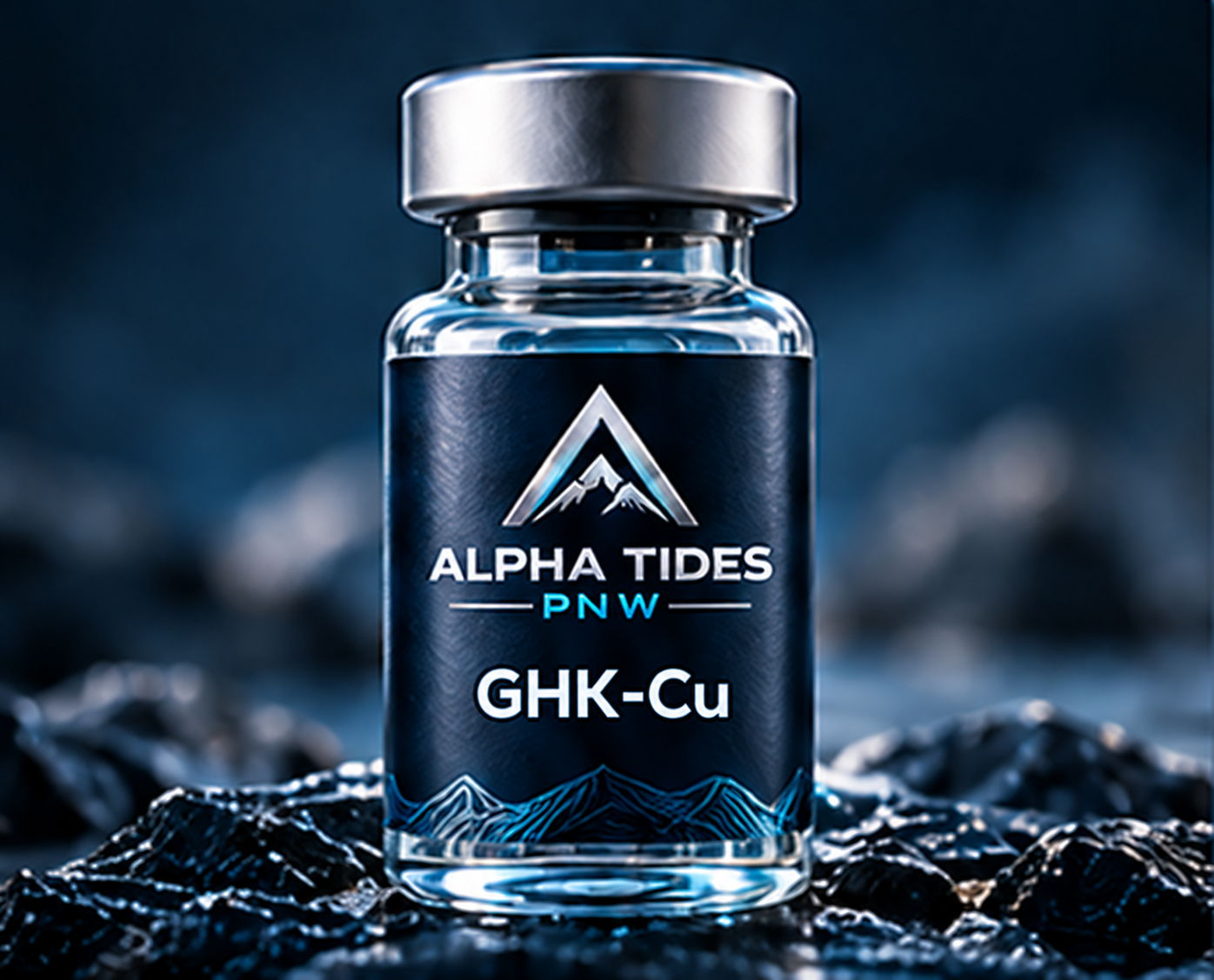
GHK-Cu 50mg
GHK-Cu is a copper-binding research peptide studied in skin, connective-tissue, and cellular-repair research. Researchers investigate its role in tissue remodeling and other repair-related signaling processes.
Standard & Express ShippingStandard $5.99 · Express $11.99
Free Express on orders over $180.
COA LibraryBrowse available documentation.
Research Use OnlyNot for human or animal consumption.
Product Details
GHK-Cu is a copper-binding research peptide studied in skin, connective-tissue, and cellular-repair research. Researchers investigate its role in tissue remodeling and other repair-related signaling processes. Alpha Tides supplies GHK-Cu as a 50mg lyophilized powder for laboratory research use.
Technical Research Details
GHK-Cu (Glycyl-L-Histidyl-L-Lysine Copper) is a copper-binding tripeptide that has been studied in laboratory and analytical research. First identified in human plasma in the 1970s, it has been referenced in scientific literature examining peptide structure, copper-binding interactions, and molecular signaling pathways. Its chemical and molecular characteristics have made it a subject of ongoing research interest.
Product Information
Form: Lyophilized powder
Contents: 50mg per vial
Structure: Gly-His-Lys Cu(II) complex
Molecular weight: 340.38 g/mol (free tripeptide)
Storage: −20°C lyophilized; 2–8°C after reconstitution
Use: For laboratory and in vitro research use only
Research Notes
GHK-Cu facilitates copper transport into cells, where it activates enzymes involved in collagen and elastin synthesis. Expression studies have identified GHK-Cu as influencing over 4,000 human genes, including those governing anti-inflammatory cascades, antioxidant defense systems, and DNA repair mechanisms — making it one of the most broad-spectrum regulatory compounds characterized in the literature.
GHK-Cu was first characterized by Loren Pickart in 1973 and has since accumulated one of the largest peer-reviewed research bases of any copper compound, with published studies spanning dermatology, oncology, neurology, wound healing, and pulmonary biology.
Storage Notes
Before reconstitution: Store lyophilized vials at −20°C, protected from light and moisture. Allow to reach room temperature before opening.
After reconstitution: Refrigerate at 2–8°C and use within 28 days. Avoid repeated freeze-thaw cycles.
Long-term storage: Freeze at −20°C for storage beyond 30 days.
Frequently Asked Questions
What is GHK-Cu used for in research?
GHK-Cu is used in wound healing research, collagen synthesis studies, gene expression regulation, anti-inflammatory signaling, and antioxidant pathway studies. It is one of the most published copper compounds in the peer-reviewed literature, with research spanning multiple tissue types and biological systems.
Why is the 50mg vial format used?
The 50mg format is standard for GHK-Cu research protocols that require consistent compound availability across extended study durations. Many in vitro studies using GHK-Cu work with multiple concentration levels and repeated treatments, making larger vials more practical than stacking multiple smaller ones.
How should GHK-Cu be stored?
Store lyophilized vials at −20°C before reconstitution. After reconstitution, refrigerate at 2–8°C and use within 28 days. For long-term storage, keep frozen at −20°C.
Research Use Disclaimer
This product is intended strictly for laboratory research use only. It is not a drug, food, or cosmetic and is not intended for human or animal consumption. This product has not been evaluated by the FDA and is not intended to diagnose, treat, cure, or prevent any disease or condition.
For laboratory research use only. Not for human or animal consumption.