

Research use only — Not for human consumption.
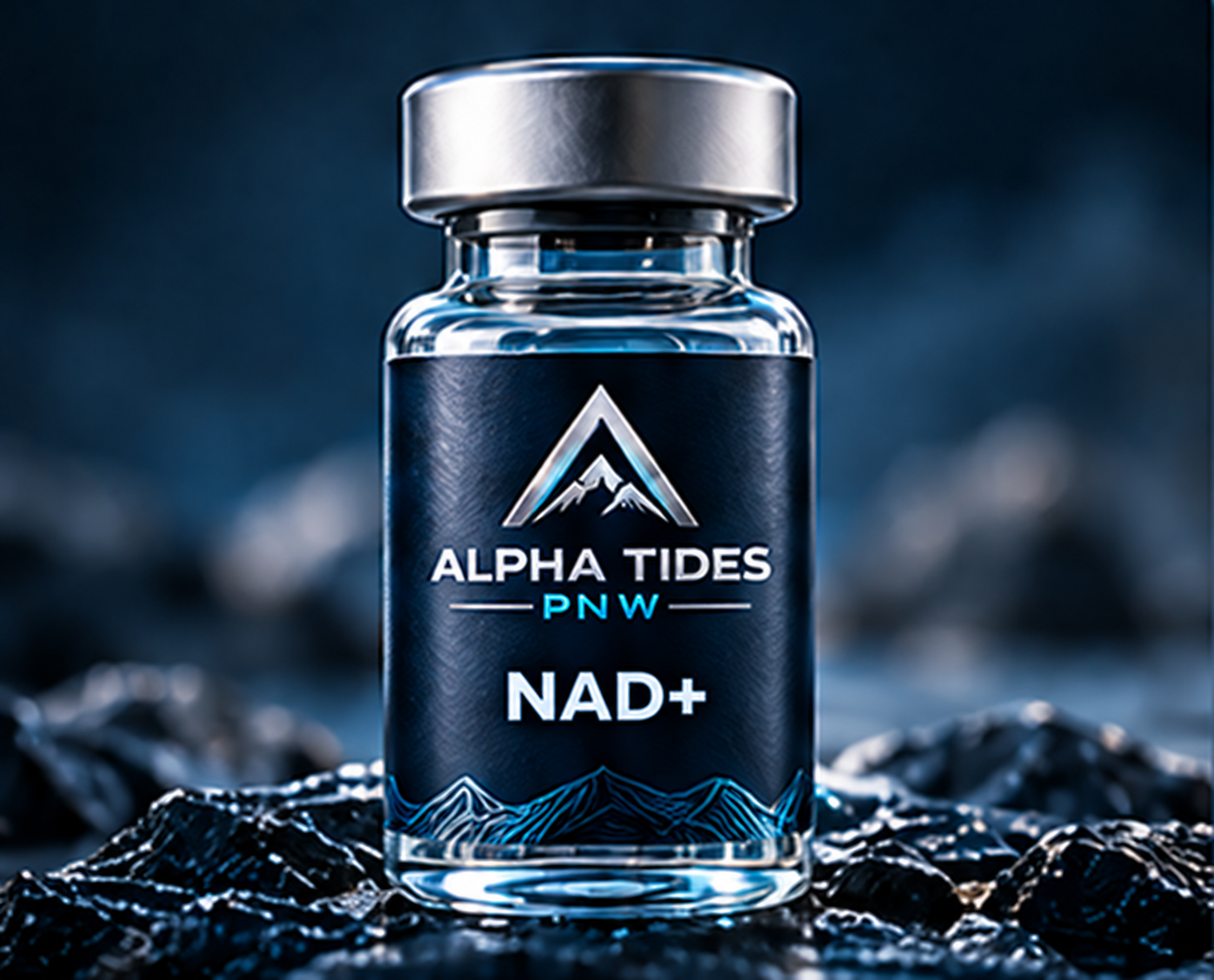
NAD+ 1000MG
NAD+ is studied for its central role in cellular energy production and metabolism. Research examines how NAD+-dependent processes support mitochondrial function and other essential cellular pathways.
Only 4 left in stock
Standard & Express ShippingStandard $5.99 · Express $11.99
Free Express on orders over $180.
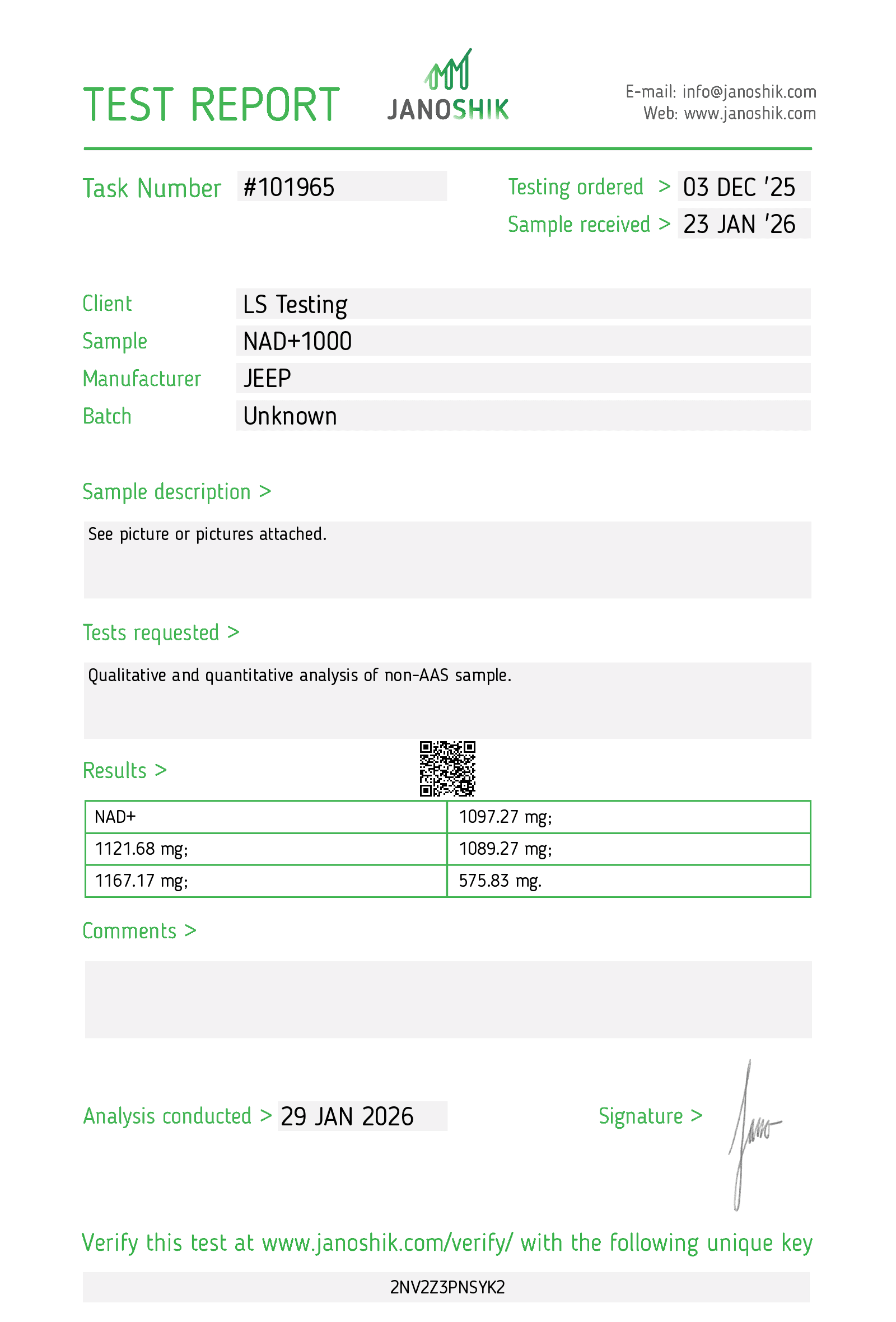
Documentation AvailableView the applicable product COA.
Research Use OnlyNot for human or animal consumption.
Product Details
NAD+ 1000mg (Nicotinamide Adenine Dinucleotide) is supplied as a research-grade lyophilized compound intended exclusively for laboratory and scientific research. Alpha Tides PNW provides this product as a 1000mg lyophilized powder, with a Certificate of Analysis available for product documentation.
Technical Research Details
NAD+ 1000mg (Nicotinamide Adenine Dinucleotide) is a research-grade lyophilized coenzyme available exclusively for laboratory and scientific research purposes. Alpha Tides PNW supplies NAD+ as a 1000mg lyophilized powder for laboratory research use. A Certificate of Analysis is available for this product.
What Is NAD+?
NAD+ (Nicotinamide Adenine Dinucleotide) is a naturally occurring coenzyme that is widely studied in biochemical and molecular research. It functions as an electron carrier in oxidation-reduction reactions and serves as a substrate for several enzyme families, including sirtuins, PARPs, and CD38.
Its involvement in cellular biochemical pathways has made NAD+ a subject of ongoing laboratory research across multiple areas of molecular biology and biochemistry. Researchers continue to study its interactions with enzyme systems, redox processes, and other fundamental cellular mechanisms.
Research Areas
NAD+ has been examined in laboratory and preclinical research across several areas:
Redox Chemistry — NAD+ and NADH participate in oxidation-reduction reactions and are frequently studied in biochemical research involving electron transfer and cellular redox processes.
Enzyme Interaction Studies — NAD+ serves as a substrate or cofactor in research involving enzyme families such as sirtuins, PARPs, and CD38. Studies examine how these molecular interactions contribute to broader biochemical pathways.
Gene Expression Research — Laboratory studies investigate the relationship between NAD+-dependent enzymes and molecular processes involved in gene expression and cellular signaling.
PARP Pathway Research — NAD+ is commonly studied in connection with PARP enzyme activity and related molecular pathways. Researchers examine these interactions in controlled laboratory models.
Molecular Signaling Research — NAD+ is used as a reference compound in studies examining biochemical signaling pathways and interactions between enzymes, cofactors, and other molecular components.
Comparative Compound Research — Laboratory research may compare NAD+ with related compounds and precursors to examine differences in chemical properties, molecular pathways, and experimental behavior.
Product Information
Compound: Nicotinamide Adenine Dinucleotide (NAD+)
CAS Number: 53-84-9
Size: 1000mg lyophilized powder
Appearance: White lyophilized powder
Reconstitution: Bacteriostatic water (BAC water) prior to use
Storage: −20°C, sealed, protected from heat and light
Format: Single amber glass vial
Use: For laboratory and in vitro research use only
Frequently Asked Questions
What is NAD+ studied for in research?
NAD+ is studied in cellular-energy metabolism, sirtuin activation, PARP-mediated DNA repair, mitochondrial function, and redox signaling models. It is one of the most widely referenced coenzymes in longevity and metabolic research.
How does NAD+ differ from NMN and NR?
NMN and NR are biosynthetic precursors that cells convert into NAD+, whereas NAD+ is the active coenzyme itself. Comparative pharmacokinetic studies of direct NAD+ versus precursor delivery are an active area of research, which is why researchers often study them side by side.
How is NAD+ reconstituted and stored?
NAD+ is reconstituted with bacteriostatic water and stored at −20°C in lyophilized form. Once reconstituted, refrigerate at 2–8°C, protect from light, and avoid freeze-thaw cycles. See the reconstitution and storage guides below.
Is a Certificate of Analysis available for this product?
Yes — a Certificate of Analysis is available for this product. See the COA section on this page, or our Certificates of Analysis page for the full document.
Research Use Disclaimer
This product is intended strictly for laboratory research use only. It is not a drug, food, or cosmetic and is not intended for human or animal consumption. This product has not been evaluated by the FDA and is not intended to diagnose, treat, cure, or prevent any disease or condition.
For laboratory research use only. Not for human or animal consumption.