

HCG is a glycoprotein widely used as a research tool in reproductive-endocrinology and steroidogenesis models. This guide explains what HCG is, the receptor pathways researchers study it through, and how it should be handled in the laboratory. It is written for qualified researchers and makes no human-use, therapeutic, or dosing claims.
Unlike the small synthetic peptides elsewhere in this library, HCG is a larger glycoprotein, which shapes both its studied behavior and its handling. The sections below cover its structure, its receptor pathway, the systems it is studied in, study-design considerations, handling, and documentation.
What Is HCG?
HCG (human chorionic gonadotropin) is a glycoprotein hormone composed of two subunits — an alpha subunit shared with other gonadotropins, and a beta subunit that is distinctive to HCG. Structurally and functionally, HCG closely resembles luteinizing hormone (LH), which is the basis for most of its use as a research tool. It is supplied as a lyophilized powder for research use and reconstituted before laboratory application.
The glycoprotein nature of HCG — its attached carbohydrate groups — contributes to its stability and signaling duration, and it is one reason the molecule is handled and stored with particular attention to the cold chain.
Discovery and Research Background
HCG has a long history as a characterized gonadotropin, and its close functional resemblance to LH established it early as a convenient, stable LH-receptor agonist for laboratory work. Researchers adopted it as a controlled stimulus for probing gonadal signaling, steroid-producing pathways, and feedback within the reproductive axis, roles it continues to serve in preclinical and cell-based models.
LH-Receptor Activity and Studied Pathways
LH/HCG Receptor Engagement
HCG binds the LH/HCG receptor (LHCGR), a G-protein-coupled receptor expressed in gonadal tissue. Because it activates the same receptor as LH but with a longer signaling duration in many models, HCG is frequently used as a stable LH-receptor agonist in research designs where a sustained, reproducible stimulus is needed.
Steroidogenesis Research
Downstream of LHCGR activation, HCG is studied in steroidogenesis models — the enzymatic pathways that produce steroid hormones. Investigators use it to stimulate and characterize these pathways in cell and tissue systems, making it a standard tool in gonadal-cell assays.
HPG-Axis Signaling
At a systems level, HCG is studied within the hypothalamic-pituitary-gonadal (HPG) axis, where researchers examine feedback relationships and gonadal signaling using HCG as a controlled LH-receptor stimulus. This lets them probe axis-level dynamics without relying on endogenous LH pulses.
Common Research Applications
- LH-receptor pharmacology: LHCGR binding and signaling characterization.
- Steroidogenesis studies: enzymatic steroid-production pathways in gonadal-tissue models.
- HPG-axis research: feedback and gonadal-signaling models.
- Reproductive-endocrinology models: controlled gonadotropin stimulation.
Research Considerations and Study Design
As a glycoprotein, HCG is more sensitive to handling than small peptides — freeze-thaw cycles and prolonged room-temperature exposure can compromise activity, so cold-chain discipline is central to reproducible results. Because signaling duration is part of why HCG is chosen over LH, time-course design deserves particular attention when comparing stimuli.
Consistent, well-characterized material is essential: lot-to-lot variability in a glycoprotein can influence assay outcomes, which is why documented identity and purity should be treated as experimental parameters and recorded with results.
Quality and Documentation
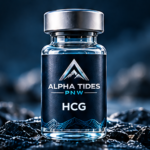
Reproducible endocrinology data depend on consistent, well-characterized material. Research-grade HCG should carry a batch-specific Certificate of Analysis documenting identity and purity. Alpha Tides PNW supplies HCG 1000 as a research-grade lyophilized compound with documentation available on request.
Recording the COA identifiers with experimental notes ties steroidogenesis and receptor results to the exact lot used.
Comparing HCG and LH as Research Stimuli
Although HCG and LH activate the same LH/HCG receptor, researchers often choose HCG over LH as a laboratory stimulus for practical reasons rooted in the molecule’s structure. HCG is heavily glycosylated, and this carbohydrate content contributes to a longer signaling duration in many research models. A longer, more stable stimulus can simplify experimental design, particularly in steroidogenesis assays where a sustained receptor signal produces a clearer, more reproducible readout than a rapidly cleared one.
This difference also shapes study design. Because HCG’s signaling profile differs in duration from a native LH pulse, time-course experiments should be planned with that distinction in mind, and comparisons between HCG-driven and LH-driven responses should account for it rather than assuming equivalence. Lot-to-lot consistency is another consideration unique to a glycoprotein of this size: variations in glycosylation between batches can influence assay outcomes, which is why a batch-specific Certificate of Analysis and careful record-keeping are especially valuable when HCG is used as a controlled LH-receptor stimulus in reproductive-endocrinology research.
Forms and Sourcing of Research HCG
Research HCG is encountered in more than one form, and the distinction matters for experimental consistency. Historically, HCG was obtained from biological sources, while recombinant production methods later provided an alternative with different lot-to-lot characteristics. For a glycoprotein whose carbohydrate structure influences signaling duration and stability, the production method and the resulting glycosylation profile can affect how the material behaves in an assay. Researchers designing longitudinal or comparative studies should therefore record not only the lot but the form of HCG used, so that results remain comparable across experiments.
Sourcing consistency is closely tied to documentation. Because subtle differences between preparations can shift steroidogenesis or receptor-signaling readouts, a batch-specific Certificate of Analysis confirming identity and purity is an important reference point, and keeping the COA identifiers with experimental records creates a traceable link between data and material. When a study spans multiple lots, briefly bridging them with a shared control condition helps detect any lot-driven shift before it is misattributed to an experimental variable. These practices are standard for working with larger biomolecules, where handling history and provenance carry more weight than they do for small, robust synthetic peptides.
Related Research Guides
- How to Evaluate Third-Party Tested Research Materials
- HCG 1000 (research compound)
- Certificates of Analysis
Research Use Only. HCG and all compounds referenced here are intended strictly for laboratory research by qualified professionals. They are not FDA approved and are not for human or animal use. Nothing in this article constitutes medical, therapeutic, or dosing guidance.
Storage & Handling
As a glycoprotein, HCG benefits from careful cold-chain practice.
- Before reconstitution: store lyophilized vials refrigerated or frozen per the supplied documentation, protected from light.
- After reconstitution: refrigerate at 2–8°C and use within the documented window; avoid freeze-thaw cycles.
- Recommended solvent: bacteriostatic water, handled under sterile technique.
Frequently Asked Questions
HCG is used as a stable LH-receptor agonist to study steroidogenesis, LHCGR signaling, and HPG-axis feedback in preclinical and cell-based models.
HCG and LH activate the same LH/HCG receptor (LHCGR). HCG often produces a longer-lasting signal in research models, which makes it a convenient tool for studying LH-receptor pathways.
Store lyophilized HCG refrigerated or frozen per its documentation and protect it from light. After reconstitution, refrigerate at 2–8°C and avoid freeze-thaw cycles.
Bacteriostatic water is commonly used for multi-use laboratory reconstitution. See the reconstitution guide for technique details.
It should include a batch-specific Certificate of Analysis confirming identity and purity so that endocrinology results remain reproducible.
HCG is a larger glycoprotein, so freeze-thaw cycles and heat can compromise its structure and activity more readily than a small synthetic peptide, making cold-chain discipline important.
Research Compounds
Research Use Only — Not for Human or Animal Consumption. Content is provided for informational and educational purposes and does not constitute medical advice.
Continue Your Research
Browse the full catalog of COA-verified research compounds.
Shop All Compounds →