
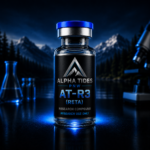
Retatrutide (AT-R3) is supplied across four vial sizes — 10mg, 15mg, 20mg, and 30mg — and researchers new to the compound often aren’t sure which format fits their study design. This guide explains what differs between the four sizes, how that maps to typical study scales, and the handling considerations that apply regardless of which vial a lab chooses. It is written for qualified researchers and makes no human-use, therapeutic, or dosing claims.
Vial size is a practical laboratory-logistics question, not a potency or purity question — every AT-R3 vial is manufactured to the same ≥99% HPLC-verified purity standard. The difference is simply how much lyophilized material is in the vial before reconstitution.
Why Retatrutide Comes in Multiple Vial Sizes
Research compounds are typically offered in more than one vial size so that a lab’s material quantity can match its study’s scale, reconstitution volume, and expected usage window without forcing researchers to either overbuy material that will expire before use, or run out mid-study and introduce a batch-to-batch variable partway through a protocol. AT-R3’s four sizes — 10mg, 15mg, 20mg, and 30mg — follow that same logic: they are the same compound at the same purity, differing only in total peptide mass per vial.
The Four Vial Sizes at a Glance
- AT-R3 10mg — the smallest format, suited to single-protocol pilot studies, early feasibility work, or labs reconstituting to a lower total-volume concentration.
- AT-R3 15mg — a mid-range step up from the 10mg format, useful where a study runs longer or needs more reconstituted solution without moving to a full 20mg vial.
- AT-R3 20mg — suited to extended-duration protocols or designs running multiple parallel conditions from a shared stock solution.
- AT-R3 30mg — the largest format, most efficient on a per-mg basis for labs running larger-scale or longer-duration research programs where reconstituting from a single vial reduces vial-to-vial variability across the study.
Every size is the same triple-agonist AT-R3 compound described in the Retatrutide (AT-R3) research guide — engaging the GLP-1, GIP, and glucagon receptors simultaneously. Choosing a vial size does not change what is being studied, only how much material is available to study it with.
Matching Vial Size to Study Design
The main variable to plan around is total reconstituted volume against expected usage across the life of the solution. A study drawing small, frequent aliquots over several weeks has different total-mass needs than a short single-timepoint comparative study. Researchers should calculate expected total mass needed across the full study — including any repeat runs or controls — before choosing a vial size, since splitting a study across multiple smaller vials introduces a batch variable that a single larger vial avoids.
It’s also worth planning reconstitution concentration deliberately: the same vial can be reconstituted to different final concentrations depending on how much solvent is used, so vial size and reconstitution volume should be planned together rather than the vial size being chosen first and the reconstitution volume worked out afterward. See the reconstitution-volume guide linked below for how to calculate this.
Quality and Documentation
All four AT-R3 vial sizes are manufactured to the same ≥99% HPLC-verified purity standard, with a third-party Certificate of Analysis available on request regardless of which size is ordered. Vial size has no bearing on identity or purity documentation — reviewing the batch-specific COA and recording its identifiers alongside experimental notes is equally important whichever format a lab selects.
Related Research Guides
- Retatrutide (AT-R3): Metabolic Research Guide
- Calculating Peptide Reconstitution Volumes
- How to Store Research Compounds Properly
- AT-R3 (Reta) — all vial sizes
- Certificates of Analysis
Research Use Only. Retatrutide (AT-R3) is intended strictly for laboratory research by qualified professionals. It is not FDA approved and is not for human or animal use. Nothing in this article constitutes medical, therapeutic, or dosing guidance.
Storage & Handling
- Before reconstitution: store lyophilized vials at −20°C, protected from light and moisture, regardless of vial size. Allow a vial to reach room temperature before opening to avoid condensation.
- After reconstitution: refrigerate at 2–8°C and use within roughly 28 days. Avoid repeated freeze-thaw cycles, which accelerate degradation — this is more consequential for larger vials since more reconstituted solution typically means a longer expected usage window.
- Recommended solvent: bacteriostatic water is the standard choice for multi-use reconstitution.
Frequently Asked Questions
Not until reconstituted. Both are lyophilized powder at the same purity; the 30mg vial simply contains three times the total peptide mass. Final concentration depends entirely on how much solvent is used during reconstitution, which researchers control independently of vial size.
No. All AT-R3 vial sizes — 10mg, 15mg, 20mg, and 30mg — are manufactured and tested to the same ≥99% HPLC-verified purity standard.
Estimate total peptide mass needed across the full study, including repeats and controls, then choose the vial size (or combination of vials) that meets that total with the fewest separate vials, to minimize batch-to-batch variability.
Yes, but each vial may carry a distinct COA/batch identifier, which introduces a variable a single larger vial avoids. For studies where batch consistency matters, a single vial sized to the full study is generally preferable.
Storage conditions are the same regardless of size (−20°C lyophilized, 2–8°C after reconstitution). The practical difference is that larger vials typically yield more reconstituted solution used over a longer window, making freeze-thaw discipline and usage-date tracking more important.
Research Compounds
Research Use Only — Not for Human or Animal Consumption. Content is provided for informational and educational purposes and does not constitute medical advice.
Continue Your Research
Browse the full catalog of COA-verified research compounds.
Shop All Compounds →