
Proper peptide storage is one of the most critical factors in maintaining compound integrity for research purposes. Even high-purity peptides can degrade rapidly if stored incorrectly — compromising your research results before an experiment even begins. This guide covers everything researchers need to know about how to store lyophilized compounds for long-term stability, and how to store reconstituted peptides once dissolved in solution.
Why Peptide Storage Matters
Peptides are sensitive molecules. Their amino acid chains can break down through several mechanisms including oxidation, hydrolysis, and microbial contamination — the same degradation pathways discussed in the pharmaceutical-sciences literature on protein structure and conformation in lyophilized solids. Improper storage — even for short periods — can result in:
- Reduced potency and purity
- Structural degradation of the peptide chain
- Inaccurate research results
- Wasted investment in quality compounds
Understanding the difference between lyophilized and reconstituted peptide storage is the essential starting point.
How to Store Lyophilized Peptides
Lyophilized compounds — supplied as a dry powder — are significantly more stable than reconstituted peptides. Most research-grade peptides are supplied in lyophilized form precisely because of this stability advantage.
Best practices for lyophilized peptide storage:
- Temperature: Store at -20°C (freezer) for long-term storage. Refrigeration at 4°C is acceptable for short-term use (days to weeks depending on the peptide)
- Light: Keep away from direct light. Use amber vials or store in a dark environment
- Moisture: Lyophilized compounds are highly susceptible to moisture. Always allow vials to reach room temperature before opening to prevent condensation from entering the vial
- Seal integrity: Keep vials tightly sealed until ready for use
Under proper conditions, most lyophilized compounds maintain stability for 12-24 months or longer.
How to Store Reconstituted Peptides
Once a peptide has been reconstituted (dissolved in a solution such as bacteriostatic water or acetic acid), its shelf life decreases significantly and storage requirements become more critical.
Best practices for reconstituted peptide storage:
- Temperature: Store at 4°C (refrigerator) for short-term use — typically up to 4 weeks depending on the peptide and reconstitution solution
- Freezing: For longer storage, aliquot into single-use portions and freeze at -20°C. Avoid repeated freeze-thaw cycles as these degrade peptide integrity
- Bacteriostatic water: Using bacteriostatic water (rather than sterile water) for reconstitution extends usable life by inhibiting microbial growth
- Light: Store reconstituted peptides away from light at all times
Reconstitution Solvent Selection
The choice of reconstitution solvent affects both solubility and storage stability:
| Peptide Type | Recommended Solvent |
|---|---|
| Most peptides | Bacteriostatic water |
| Hydrophobic peptides | Small amount of acetic acid (0.1%), then dilute with bacteriostatic water |
| Basic peptides | Dilute acetic acid |
| Acidic peptides | Dilute ammonia or acetonitrile |
Always reconstitute slowly — add solvent to the side of the vial and allow the peptide to dissolve naturally without aggressive shaking or vortexing, which can damage the peptide structure.
Common Storage Mistakes to Avoid
1. Opening cold vials immediately Always let refrigerated or frozen vials equilibrate to room temperature before opening. This prevents moisture condensation from entering the vial and degrading the lyophilized powder.
2. Repeated freeze-thaw cycles Each freeze-thaw cycle degrades reconstituted peptides. Aliquot into single-use portions before freezing to avoid this. See our guide on why repeated freeze-thaw cycles degrade peptides for the mechanism behind this.
3. Storing in non-sterile containers Always use sterile, sealed vials. Contamination is a leading cause of peptide degradation.
4. Exposure to light UV light can break peptide bonds. Store all peptides — lyophilized or reconstituted — in dark or amber containers.
5. Using tap or distilled water for reconstitution Always use bacteriostatic water or the appropriate research-grade solvent. Tap and distilled water introduce contaminants and reduce shelf life.
Peptide-Specific Storage Notes
Some peptides have unique storage considerations:
- BPC-157 — Stable lyophilized at -20°C. Reconstituted, use within 2-4 weeks refrigerated
- TB-500 — Store lyophilized at -20°C. Sensitive to repeated freeze-thaw; aliquot before freezing
- GHK-Cu — Contains copper; store away from light and oxidizing conditions
- CJC-1295 — Stable lyophilized; reconstituted store at 4°C and use within 3-4 weeks
- Ipamorelin — Standard storage conditions apply; avoid repeated freeze-thaw
Quick Reference Storage Guide
| State | Temperature | Light | Shelf Life |
|---|---|---|---|
| Lyophilized | -20°C (long term) / 4°C (short term) | Avoid | 12-24+ months |
| Reconstituted | 4°C | Avoid | 2-4 weeks |
| Reconstituted (frozen aliquots) | -20°C | Avoid | 3-6 months |
Using the right reconstitution solvent matters — Alpha Tides PNW stocks research-grade Bacteriostatic Water (BAC Water) for lyophilized peptide preparation.
What To Do When Your Order Arrives
When your Alpha Tides PNW order arrives, your peptides are shipped as lyophilized powder in sealed vials. Let the package reach room temperature before opening. Transfer to your freezer at -20C immediately and store upright in an airtight container with desiccant. Having the right equipment checklist for handling research peptides ready before your order arrives makes this initial handling step easier.
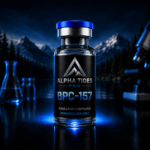
How to Store BPC-157
Store lyophilized BPC-157 at -20C away from light. Once reconstituted with bacteriostatic water, store at 4C and use within 4 weeks. Aliquot before freezing to avoid repeated freeze-thaw cycles.
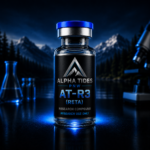
How to Store AT-R3 (Reta)
Store lyophilized AT-R3 (Reta) at -20C. Once reconstituted, store at 4C and use within 3-4 weeks. Gently swirl to mix rather than shake or vortex.
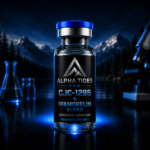
How to Store CJC-1295 and Ipamorelin
Both are stable lyophilized at -20C for up to 24 months. Once reconstituted, store at 4C and use within 4-6 weeks. Keep away from light at all times. Alpha Tides PNW supplies these as a combined CJC-1295 + Ipamorelin blend.
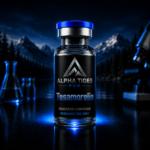
How to Store Tesamorelin
Store lyophilized Tesamorelin at -20C for up to 24 months. Once reconstituted, use within 21 days at 4C. Do not freeze reconstituted Tesamorelin as freezing in solution causes aggregation.
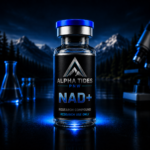
How to Store NAD+
Store lyophilized NAD+ at -20C in an amber or opaque vial away from light. Once reconstituted, use within 1-2 weeks at 4C. Freeze in aliquots for longer storage.
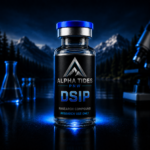
How to Store DSIP
Store lyophilized DSIP at -20C, protected from light and moisture like any other lyophilized research compound. Once reconstituted with bacteriostatic water, store at 4C and use within 2-3 weeks — DSIP is a short sequence with no unusual storage requirements beyond standard cold-chain handling.
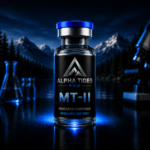
How to Store MT-II
Store lyophilized MT-II at -20C away from light. Once reconstituted, refrigerate at 4C and use within 3-4 weeks. As with other lyophilized compounds, aliquoting before freezing avoids repeated freeze-thaw degradation.
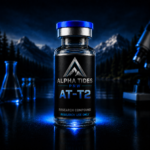
How to Store AT-T2 (Tirz)
Store lyophilized AT-T2 (Tirz) at -20C. Once reconstituted, store at 4C and use within 3-4 weeks, consistent with the storage window for other GLP-1/GIP-family research compounds such as AT-R3 (Reta) above.
Source Quality Research Compounds
Proper storage starts with sourcing high-purity, COA-verified peptides. Alpha Tides PNW supplies lyophilized, third-party tested research compounds with Janoshik-verified certificates of analysis for every product — see our Certificate of Analysis library to review batch documentation, or read more about our sourcing standards. Questions about a specific batch or shipment can go through our contact page; general shipping timelines are on our shipping policy.
Related Research Guides
- How to Reconstitute Lyophilized Peptides for Laboratory Research — Step-by-step guide to reconstituting lyophilized compounds for research use
- KLOW Blend: A Multi-Compound Research Formula for Recovery Studies — Multi-compound research blend storage and handling reference
Explore Research Categories
- Research Guides — Full library of compound guides and research protocols
- Research Peptide Shop — COA-verified lyophilized compounds from Alpha Tides
Continue exploring at the Alpha Tides Research Hub for additional guides covering reconstitution, compound profiles, compound stacks, and more.
Storage & Handling
Multi-compound research blends like KLOW — combining GHK-Cu, BPC-157, TB-500, and KPV — should be stored under the strictest single-compound rule in the mix: -20C lyophilized, and once reconstituted, refrigerated at 4C and used within 2-4 weeks. See the KLOW Blend research guide for a full breakdown of what’s in the stack.
The compound(s) discussed in this article are available with a Certificate of Analysis on the Alpha Tides shop.
Frequently Asked Questions
Lyophilized compounds should be stored at -20°C for long-term stability, protected from light and moisture. Short-term refrigeration at 4°C is acceptable for a few weeks. Always allow sealed vials to reach room temperature before opening to prevent moisture condensation on the powder.
Reconstituted peptide solutions should be stored at 2–8°C and used within 28–30 days. For longer storage, aliquot into single-use portions and freeze at -20°C, where they remain stable for 3–6 months. Repeated freeze-thaw cycles degrade compound integrity and should be avoided.
Peptide degradation is primarily caused by heat, UV light, moisture, improper reconstitution solvent pH, and repeated freeze-thaw cycles. Bacterial contamination in reconstituted solutions is also a significant source of degradation. Even high-purity compounds will degrade under improper storage conditions.
Yes. Elevated temperatures significantly accelerate peptide bond hydrolysis and oxidation. Lyophilized compounds maintain stability for 12–24+ months at -20°C but degrade much faster at room temperature. Cold-chain storage is essential for maintaining compound integrity.
Not fundamentally — a blend is stored under the strictest rule among its components, which in practice means the same -20°C lyophilized / 4°C reconstituted, use-within-2–4-weeks guidance that applies to each compound individually. There's no special interaction that changes the storage chemistry of combining them in one vial.
Sometimes, but not reliably. Visible clumping, discoloration, or incomplete dissolution can indicate degradation or contamination, but a compound can also degrade chemically while still looking visually normal. This is why batch-specific third-party testing and a Certificate of Analysis — not visual inspection — is the standard researchers use to confirm compound identity and purity.
Research Compounds
Research Use Only — Not for Human or Animal Consumption. Content is provided for informational and educational purposes and does not constitute medical advice.
Continue Your Research
Browse the full catalog of COA-verified research compounds.
Shop All Compounds →
One Response