

Research use only — Not for human consumption.
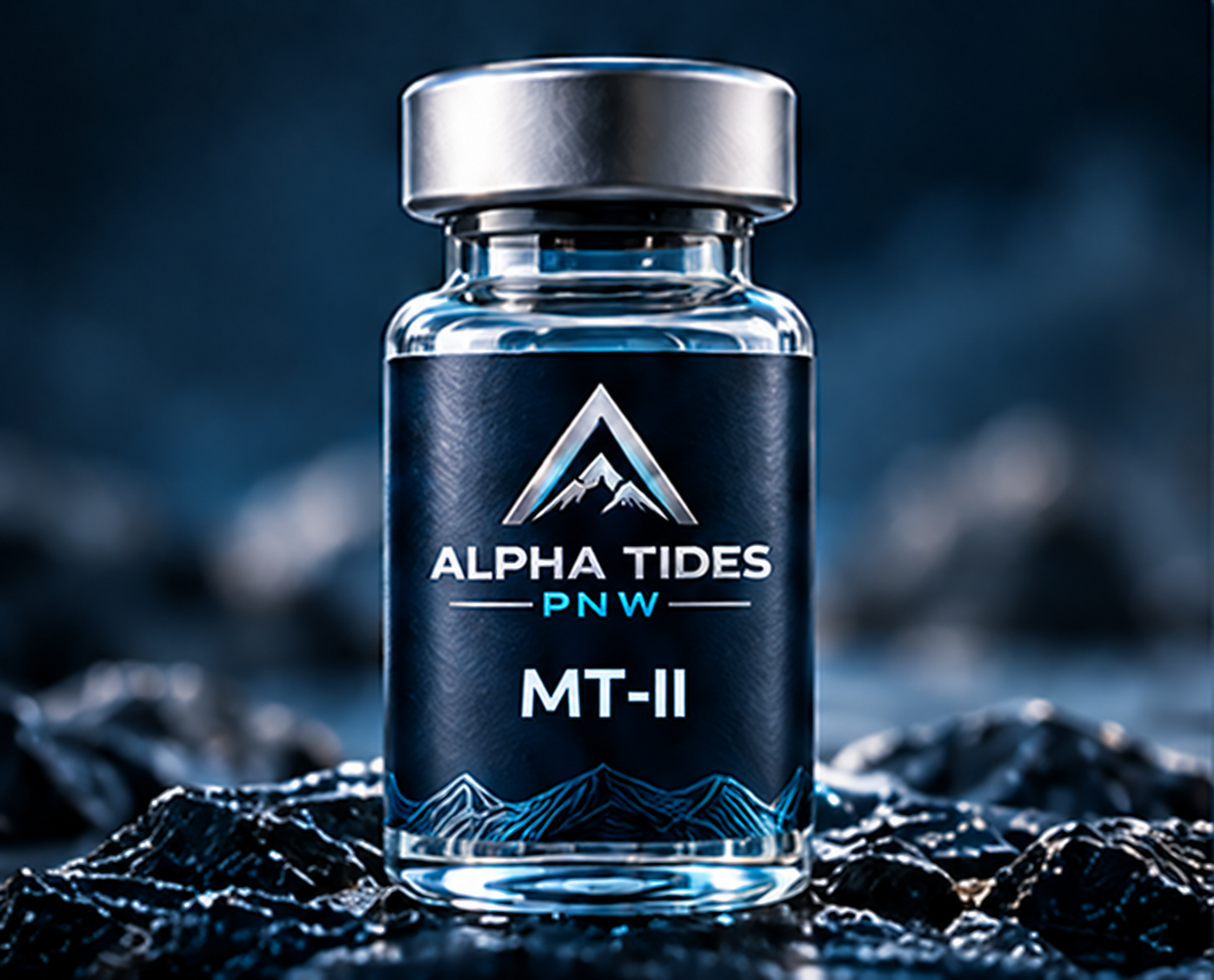
MT-II 10mg
MT-II is studied for its activity within melanocortin signaling pathways, including pathways involved in pigmentation and other biological responses. Researchers examine how melanocortin receptors influence these…
Only 3 left in stock
Standard & Express ShippingStandard $5.99 · Express $11.99
Free Express on orders over $180.
COA LibraryBrowse available documentation.
Research Use OnlyNot for human or animal consumption.
Product Details
MT-II is studied for its activity within melanocortin signaling pathways, including pathways involved in pigmentation and other biological responses. Researchers examine how melanocortin receptors influence these processes. Alpha Tides supplies MT-II as a 10mg lyophilized powder for laboratory research use.
Technical Research Details
MT-II (Melanotan II) is a synthetic cyclic heptapeptide studied in melanocortin receptor research. It interacts with multiple melanocortin receptor subtypes, including MC1R, MC3R, MC4R, and MC5R, making it a useful reference compound for examining receptor binding, signaling activity, and comparative receptor pharmacology.
Its cyclic peptide structure and broad receptor profile have made MT-II a subject of research across several areas of melanocortin biology. Alpha Tides supplies MT-II as a 10mg lyophilized powder for laboratory research use.
Product Information
Form: Lyophilized powder
Contents: 10mg per vial
Structure: Cyclic heptapeptide; cyclo[Nle4, D-Phe7]-α-MSH4-10
Receptor targets: MC1R, MC3R, MC4R, MC5R (non-selective agonist)
Storage: −20°C lyophilized; 2–8°C after reconstitution
Use: For laboratory and in vitro research use only
Research Notes
MT-II is widely used as a reference compound in melanocortin receptor pharmacology because of its broad activity across multiple receptor subtypes. Research has examined its interactions with MC1R, MC3R, MC4R, and MC5R to better understand receptor binding characteristics, downstream signaling, and differences in receptor selectivity.
Its non-selective receptor profile makes MT-II useful for comparative studies involving more selective melanocortin analogs. Researchers have used the compound to investigate structure–activity relationships and to examine how modifications to melanocortin peptides may influence receptor preference and signaling behavior.
MT-II has been referenced in peer-reviewed research across melanocortin pharmacology and receptor biology, where it serves as a comparative tool for studying melanocortin signaling systems and receptor-selective compound development.
Research Notes
MT-II acts as a potent non-selective agonist across the melanocortin receptor family. Activation of MC1R initiates adenylate cyclase signaling, increasing intracellular cyclic AMP — a cascade that activates downstream enzymes controlling melanin synthesis. MC3R and MC4R activation has been studied in neuroendocrine contexts, particularly in relation to energy balance, appetite, and hypothalamic-pituitary axis communication.
MT-II non-selective receptor profile makes it a valuable research tool for characterizing melanocortin system-wide responses compared to receptor-selective derivatives. It has been used as a reference compound in numerous receptor pharmacology and functional selectivity studies. Its research legacy includes serving as the structural precursor from which PT-141 (Bremelanotide) was derived — a modification designed to isolate MC4R-mediated effects while minimizing peripheral MC1R pigmentation activity.
The compound has been the subject of peer-reviewed research spanning pigmentation biology, neuroendocrine function, immune signaling, and metabolic regulation for over three decades.
Storage Notes
Before reconstitution: Store lyophilized vials at −20°C, protected from light and moisture. Allow to reach room temperature before opening.
After reconstitution: Refrigerate at 2–8°C and use within 28 days. Avoid repeated freeze-thaw cycles.
Recommended solvent: Bacteriostatic water.
Frequently Asked Questions
What is MT-II used for in research?
MT-II is used as a non-selective melanocortin receptor agonist for studying MC1R, MC3R, MC4R, and MC5R pharmacology. Research applications span pigmentation biology, neuroendocrine signaling, energy balance, and immune modulation.
What is the difference between MT-II and PT-141?
PT-141 (Bremelanotide) is a structural derivative of MT-II developed to selectively engage MC3R and MC4R in the CNS while reducing MC1R-mediated pigmentation activity. MT-II is non-selective across all four receptor subtypes, making it a broader pharmacological tool for comparative melanocortin system studies.
How should MT-II be stored?
Store lyophilized vials at −20°C before reconstitution. After reconstitution with bacteriostatic water, refrigerate at 2–8°C and use within 28 days.
MT-II is intended strictly for laboratory research by qualified professionals. It is not FDA approved and is not for human or animal use. By purchasing, the buyer confirms the product will be used solely for in vitro research in compliance with all applicable laws and regulations.
For laboratory research use only. Not for human or animal consumption.