

PT-141 and MT-II are two of the most frequently studied melanocortin-receptor agonists, and because one was derived from the other, they are natural subjects for comparison. This guide examines how PT-141 and MT-II differ in structure, receptor selectivity, and the pathways researchers study them in, and why the pair forms a useful model for structure-activity research. It is written for qualified researchers and makes no human-use, therapeutic, or dosing claims.
Understanding the relationship between these two compounds clarifies why researchers often place them side by side in the same experimental design. The sections below cover their shared origin, the melanocortin receptor system, the key differences that matter for study design, and practical handling considerations.
Shared Origin, Different Selectivity
MT-II (Melanotan II) is a synthetic cyclic heptapeptide analog of alpha-melanocyte-stimulating hormone (α-MSH) that acts as a non-selective agonist across multiple melanocortin receptor subtypes. PT-141 (bremelanotide) was developed directly from MT-II through structural modification, with the specific aim of reducing MC1R-associated pigmentation activity while preserving engagement at the MC3R and MC4R subtypes. In other words, PT-141 is a more selective descendant of a deliberately broad parent compound.
This lineage is exactly what makes the pair valuable in research. Comparing a non-selective agonist with a selectively refined analog derived from it lets investigators attribute specific downstream effects to particular receptor subtypes, and it provides a clean, well-documented example of how targeted structural changes reshape a compound’s pharmacological profile.
The Melanocortin Receptor System
The melanocortin system comprises five receptor subtypes (MC1R–MC5R). MC1R is associated with pigmentation pathways, driving cAMP signaling that influences melanin synthesis. MC3R and MC4R are associated with central-nervous-system signaling relevant to energy balance, neuroendocrine regulation, and autonomic output. Because MT-II engages these subtypes broadly while PT-141 is weighted toward MC3R/MC4R, the two compounds illuminate different corners of the same system.
Key Differences for Study Design
| Feature | MT-II (Melanotan II) | PT-141 (Bremelanotide) |
|---|---|---|
| Receptor profile | Non-selective (MC1R, MC3R, MC4R, MC5R) | Weighted toward MC3R/MC4R; reduced MC1R activity |
| Structural relationship | Parent compound | Derived from MT-II via structural modification |
| Primary research context | Pigmentation pathway (MC1R) research; broad reference agonist | Central MC3R/MC4R signaling research |
| Typical role in study design | Positive control / broad reference agonist | Selectivity-refined comparator |
Receptor Selectivity
The central difference is selectivity. MT-II’s non-selective profile makes it a broad reference agonist and a dependable positive control, whereas PT-141’s reduced MC1R activity makes it more suitable for studies focused on central MC3R/MC4R signaling without a strong pigmentation confound.
Pigmentation vs Central Signaling
For melanogenesis research, MT-II’s MC1R activity is an asset. For neuroendocrine and central-signaling research, PT-141’s shift away from MC1R can reduce a confounding variable. Choosing between them therefore depends on which arm of the melanocortin system a study is designed to probe.
Structure-Activity Relationships
Because PT-141 differs from MT-II by defined structural modifications, the pair is frequently used to teach and study structure-activity relationships. Running both in a single design lets researchers connect a specific structural change to a measurable shift in receptor engagement.
When Researchers Choose Each Compound
- Choose MT-II when a broad, non-selective melanocortin agonist or a pigmentation-pathway (MC1R) model is needed, or as a reference/positive control.
- Choose PT-141 when a study focuses on central MC3R/MC4R signaling and a reduced pigmentation confound is preferred.
- Use both together in comparative pharmacology and structure-activity studies to separate subtype contributions.
Research Considerations
Because these compounds differ in selectivity rather than mechanism class, experiments intended to isolate a single receptor should still include selective antagonists or knockdown controls; selectivity is relative, not absolute. Running MT-II and PT-141 in parallel arms of the same design, under identical reconstitution and storage conditions, minimizes confounding and produces the cleanest comparison.
As with all lyophilized peptides, purity and reconstitution discipline affect reproducibility. Documenting each compound’s batch Certificate of Analysis and keeping reconstituted solutions within their stable windows ensures that observed differences reflect receptor pharmacology rather than material variability.
Designing a PT-141 vs MT-II Comparison
A rigorous side-by-side study of PT-141 and MT-II benefits from a few deliberate design choices. First, both compounds should be reconstituted in the same solvent, at matched concentrations, and used within the same freshness window, so that any measured difference reflects receptor pharmacology rather than material handling. Second, because both are melanocortin agonists that overlap at MC3R and MC4R, a study aiming to isolate the pigmentation (MC1R) axis should include selective antagonists or knockdown conditions to confirm that an observed pigmentation signal is genuinely MC1R-dependent. Third, dose-response and time-course readouts collected in parallel arms make the selectivity contrast between the two compounds far easier to interpret than single-point measurements.
The value of this comparison extends beyond the two molecules themselves. Because PT-141 was engineered from MT-II specifically to shift receptor selectivity, the pair functions as a controlled natural experiment in structure-activity relationships. Investigators building a broader melanocortin dataset often anchor it with MT-II as the non-selective reference and add PT-141 to represent a selectivity-refined analog, then extend the series with other agonists and antagonists as needed. Keeping meticulous records of which batch of each compound was used — tied to its Certificate of Analysis — ensures that a dataset assembled across many experiments remains internally consistent and reproducible over time.
Summary: Key Takeaways for Researchers
PT-141 and MT-II are closely related melanocortin agonists whose comparison sits at the heart of melanocortin structure-activity research. The essential points for study planning are:
- Shared origin: PT-141 was engineered directly from MT-II, making the pair a controlled model of how structural change reshapes receptor selectivity.
- Selectivity difference: MT-II is a broad, non-selective agonist across melanocortin subtypes; PT-141 has reduced MC1R activity and emphasizes MC3R/MC4R engagement.
- Use-case split: MT-II suits pigmentation (MC1R) models and reference-agonist roles; PT-141 suits central MC3R/MC4R signaling studies with a smaller pigmentation confound.
- Design discipline: run both in parallel arms under matched conditions, add selective antagonists when isolating a single subtype, and record each batch’s Certificate of Analysis.
Treated together as a matched pair rather than as isolated compounds, PT-141 and MT-II give melanocortin researchers a compact, well-documented framework for connecting molecular structure to receptor pharmacology, and for building selectivity datasets that remain consistent across many experiments.
Related Research Guides
- What Is MT-II? A Melanocortin Research Overview
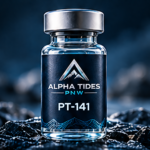
- PT-141 10mg (research compound)
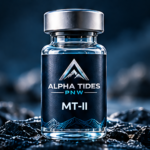
- MT-II 10mg (research compound)
- Certificates of Analysis
- Melanocortin Research category — browse all melanocortin research compounds
Research Use Only. PT-141, MT-II, and all compounds referenced here are intended strictly for laboratory research by qualified professionals. They are not FDA approved and are not for human or animal use. Nothing in this article constitutes medical, therapeutic, or dosing guidance.
Storage & Handling
- Before reconstitution: store lyophilized vials of both compounds at −20°C, protected from light and moisture.
- After reconstitution: refrigerate at 2–8°C and use within roughly 14–28 days; avoid freeze-thaw cycles.
- Recommended solvent: bacteriostatic water, handled under sterile technique.
Frequently Asked Questions
MT-II is a non-selective melanocortin agonist, while PT-141 was derived from it to reduce MC1R pigmentation activity and emphasize MC3R/MC4R engagement. The core difference is receptor selectivity.
MT-II is generally preferred for melanogenesis research because it retains strong MC1R activity, the receptor most associated with pigmentation signaling.
Because PT-141 is a structurally modified descendant of MT-II, comparing them lets researchers link specific structural changes to shifts in receptor selectivity — a clear structure-activity model.
Yes. Both are lyophilized peptides best stored at −20°C before reconstitution and refrigerated at 2–8°C afterward, with freeze-thaw cycles avoided.
Selectivity is relative, not absolute. PT-141 has reduced MC1R activity compared with MT-II, but studies isolating a single receptor should still use appropriate antagonist or knockdown controls.
Ideally, each compound used in a comparative study has a batch-specific Certificate of Analysis. COA availability and testing scope vary by product — check the individual product page before relying on one for a specific batch.
Yes. Running them in parallel arms under identical conditions is the standard way to compare their receptor selectivity and produce interpretable structure-activity data.
MT-II is generally used as the non-selective reference agonist, while PT-141 represents a selectivity-refined analog derived from it.
Research Compounds
Research Use Only — Not for Human or Animal Consumption. Content is provided for informational and educational purposes and does not constitute medical advice.
Continue Your Research
Browse the full catalog of COA-verified research compounds.
Shop All Compounds →