
Peptide stacking refers to the practice of combining two or more research compounds in a single experimental protocol. In preclinical and laboratory research, stacking is used to evaluate whether peptide combinations produce additive, synergistic, or antagonistic effects in cellular or animal models. Understanding how different compounds interact across distinct receptor pathways is a key area of peptide research, and structured compound stacking research protocols are increasingly common in published literature.
Why Researchers Combine Peptides
Different peptides act on distinct receptor pathways. In research settings, stacking allows investigators to study cumulative effects across independent mechanisms, evaluate whether co-administration modulates outcomes compared to individual administration, and mirror more complex physiological signaling environments. Peptide stacking research is especially active in areas of metabolic function, tissue repair, growth signaling, and neuroprotection.
A well-designed stacking protocol pairs compounds with complementary — rather than overlapping — mechanisms. This allows researchers to attribute specific outcome changes to specific pathways while still characterizing the combined effect on overall endpoints.
This distinction maps onto a broader research-design concept. A single-variable design changes exactly one factor between experimental groups, which makes causal attribution straightforward. A multi-variable design — which is what compound stacking is — changes several factors (multiple compounds) at once. That can reveal interaction effects a single-variable design would miss, but at the cost of needing more control arms to attribute any given outcome to a specific compound or combination. Because stacking research is inherently multi-variable, the single-compound control groups described below are not optional — without them, an observed effect cannot be attributed to any one component of the stack.
Commonly Studied Peptide Research Combinations
Growth Hormone Secretagogues: CJC-1295 + Ipamorelin
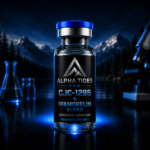
CJC-1295 (a GHRH analogue) and Ipamorelin (a ghrelin receptor agonist) are among the most studied GHRH/GHRP combinations in research. Co-administration studies have examined how this pairing affects pulsatile GH release patterns compared to either peptide alone. CJC-1295 sustains GHRH-receptor signaling — the duration depends on whether the DAC-modified or non-DAC form is used — while Ipamorelin selectively stimulates GH release with a favorable selectivity profile — minimal effects on cortisol and prolactin distinguish it from earlier GHRP compounds. Alpha Tides PNW supplies CJC-1295 5mg + Ipamorelin 5mg (the non-DAC form of CJC-1295, per its Certificate of Analysis) as a pre-blended lyophilized research peptide for qualified research applications.
Tissue Repair: BPC-157
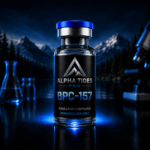
BPC-157 (Body Protection Compound 157) is a stable pentadecapeptide studied extensively in animal models for its effects on gastrointestinal tissue, tendon healing, and angiogenesis. Researchers have examined BPC-157 in combination with other repair-focused peptides — including TB-500 — to evaluate interaction effects on healing endpoints across musculoskeletal and GI models. Alpha Tides PNW offers BPC-157 10MG with ≥99% purity verified by independent third-party analysis.
Metabolic Research: AT-R3 (Reta)
AT-R3 (Reta) is a GLP-1/GIP/glucagon triple receptor agonist and one of the most active areas of metabolic peptide research. Some research protocols combine GLP receptor agonists with peptides supporting lean tissue maintenance to study composite effects on metabolic parameters, including body composition, insulin sensitivity markers, and lipid profiles in animal models. Alpha Tides PNW supplies AT-R3 (Reta) as a lyophilized research peptide.
Cellular Energy Cofactors: NAD+
NAD+ (nicotinamide adenine dinucleotide) is a coenzyme involved in hundreds of enzymatic reactions, including the mitochondrial electron transport chain. Preclinical research has explored NAD+ in combination with other compounds to study synergistic effects on cellular energy metabolism, sirtuin pathway activation, and markers of metabolic aging (see our NAD+ and cellular energy research guide for a closer look at these pathways). Alpha Tides PNW offers NAD+ 500MG for laboratory research applications.
Proprietary Recovery Stacks: KLOW Blend
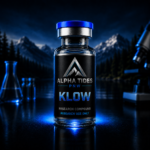
Pre-formulated research blends simplify multi-compound protocols by standardizing component ratios and eliminating the need to source and combine individual peptides. KLOW 80MG is a proprietary quad-peptide blend combining GHK-Cu, BPC-157, TB-500, and KPV — four compounds that each address distinct stages of the inflammatory and tissue repair cascade. KLOW is designed for researchers studying multi-pathway interactions in recovery and regeneration models.
Key Considerations for Compound Stacking Research Protocols
Purity and Source Verification
When conducting multi-compound research, the purity of each component is critical. Contaminants in any single peptide can confound results across the entire stack. Researchers should use third-party tested peptides with verified Certificates of Analysis (COAs) from each batch. Compounds from Alpha Tides PNW with COA documentation are tested through Janoshik Analytical; testing scope varies by product — some certificates report identity and amount only, others include a purity result — so review the specific certificate for each product and batch rather than assuming a figure.
Dosing and Administration Intervals
Peptide stacking research protocols typically account for the half-life of each compound when scheduling administration. GHRH analogues extended with a DAC modification have longer half-lives than their non-DAC counterparts, while short-acting peptides like Ipamorelin require more frequent dosing. (The CJC-1295 supplied by Alpha Tides PNW is the non-DAC form — see the CJC-1295 + Ipamorelin guide for details.) Protocol design should reflect the pharmacokinetic profile of each compound to ensure consistent plasma levels during the study window.
Controls and Blinding
Rigorous compound stacking research includes single-compound control groups alongside the combined protocol. This allows researchers to differentiate individual contributions from synergistic or antagonistic interaction effects. Wherever feasible, blinded outcome assessment further strengthens the interpretability of stacking studies.
Reconstitution and Storage
Lyophilized compounds should be reconstituted with bacteriostatic water (BAC water) and stored at 2–8°C after reconstitution. When stacking multiple compounds, each peptide should typically be reconstituted separately — unless using a pre-formulated blend like KLOW — to maintain accurate dosing of each component.
Sourcing Research Compounds for Stacking Protocols
All compounds used in compound stacking research should be sourced from suppliers who provide third-party COA documentation. Alpha Tides PNW supplies lab-grade, lyophilized research compounds including CJC-1295 + Ipamorelin, BPC-157, AT-R3 (Reta), NAD+ 500MG, and the KLOW 80MG blend, each with its own batch-specific Certificate of Analysis — testing scope (identity, amount, and where applicable, purity) varies by product, so review the certificate linked from each product page before relying on a specific figure.
Summary: Key Takeaways for Researchers
Compound stacking is a multi-variable research approach with real methodological demands. The essential points for study planning are:
- Multi-variable by design: stacking changes more than one factor at once, so single-compound control arms are required to attribute any outcome to a specific component.
- Complementary, not overlapping: the strongest stacking protocols pair compounds with distinct mechanisms rather than redundant ones.
- Pharmacokinetics drive timing: half-life differences between compounds — including whether a GHRH analogue is the DAC or non-DAC form — should shape the study’s sampling and administration schedule.
- Documentation varies by product: COA testing scope differs across compounds — some report identity and amount only, others include purity — so verify what each specific certificate actually covers.
- Reconstitution: individually-sourced compounds are typically reconstituted separately; pre-formulated blends like KLOW remove that step by standardizing ratios in one vial.
Related Research Guides
- What Is CJC-1295 + Ipamorelin? A Researcher’s Guide — the GHRH/GHRP dual-mechanism rationale behind the blend discussed above
- Retatrutide (AT-R3): Metabolic Research Guide — a triple-agonist compound frequently studied in combination protocols
- What Is Tirzepatide (AT-T2)? A Research Guide — a dual-agonist comparator for the same research question
- KLOW Blend: Multi-Compound Recovery Research — a pre-formulated four-compound blend
- Deadpool Stack — another pre-formulated research blend, combining BPC-157, TB-500, and Cartalax
- GH Secretagogues: GHRH vs Ghrelin Agonists — the two-receptor-class rationale behind CJC-1295 + Ipamorelin combination research
- More Laboratory Techniques guides
Disclaimer: All products sold by Alpha Tides PNW are intended for laboratory research purposes only. They are not approved for human consumption, veterinary use, or therapeutic application. This article is for educational purposes and does not constitute medical advice.
The compound(s) discussed in this article are available with a Certificate of Analysis on the Alpha Tides shop.
Frequently Asked Questions
Stacking refers to combining two or more research compounds in a single experimental protocol to study additive, synergistic, or antagonistic effects across distinct receptor pathways, rather than administering one compound at a time.
Because the two compounds act on different receptors (GHRH receptor and ghrelin receptor), combining them lets researchers model dual-pathway stimulation that more closely resembles natural pulsatile GH release than either compound alone.
Rigorous protocols include single-compound control groups alongside the combined arm, so researchers can differentiate each compound's individual contribution from synergistic or antagonistic interaction effects.
Individual compounds combined ad hoc should typically be reconstituted separately to maintain accurate per-component dosing. A pre-formulated blend like KLOW standardizes component ratios in a single vial, removing that step.
Each compound's product page links to its Certificate of Analysis where available; a searchable index of current certificates is also maintained on the COA page linked below.
Research Compounds
Research Use Only — Not for Human or Animal Consumption. Content is provided for informational and educational purposes and does not constitute medical advice.
Continue Your Research
Browse the full catalog of COA-verified research compounds.
Shop All Compounds →