

Nicotinamide adenine dinucleotide (NAD+) is a coenzyme present in all living cells and one of the most extensively studied molecules in metabolic and aging biology. It plays a central role in cellular energy production, particularly within the mitochondrial electron transport chain where it facilitates the conversion of nutrients into ATP — the primary energy currency of the cell. NAD+ research has emerged as one of the most active fields in preclinical biochemistry, with implications for aging models, metabolic disease research, and cellular stress response pathways.
The NAD+/NADH Cycle and Cellular Energy
NAD+ exists in two interconvertible forms: its oxidized form (NAD+) and its reduced form (NADH). In cellular respiration, NAD+ accepts electrons from metabolic intermediates — becoming NADH — which then donates those electrons to the electron transport chain to drive ATP synthesis. This cycle is fundamental to three major metabolic processes:
- Glycolysis — the conversion of glucose to pyruvate in the cytoplasm
- The citric acid (Krebs) cycle — oxidative metabolism of acetyl-CoA in mitochondria
- Oxidative phosphorylation — ATP generation via the mitochondrial electron transport chain
Research models examining disruptions to NAD+ availability consistently find impaired mitochondrial function, reduced ATP output, and increased markers of cellular oxidative stress. This makes NAD+ availability a critical variable in studies of metabolic dysfunction and energy-dependent cellular processes.
NAD+ and the Sirtuin Pathway
Beyond its role in energy metabolism, NAD+ is a required substrate for sirtuins (SIRT1–7), a family of protein deacetylases involved in gene expression regulation, DNA repair, and mitochondrial biogenesis. Research in animal models has demonstrated that NAD+ availability directly governs sirtuin enzymatic activity — a finding that has positioned NAD+ research at the intersection of metabolic and longevity biology.
Key sirtuins studied in relation to NAD+ availability include:
- SIRT1 — metabolic homeostasis, fat mobilization, glucose regulation
- SIRT3 — mitochondrial quality control, ROS management
- SIRT6 — DNA repair, telomere maintenance, inflammatory regulation
Preclinical research has shown that pharmacological or genetic activation of these sirtuins can partially replicate the metabolic benefits associated with caloric restriction in rodent models, and NAD+ is the common upstream requirement across all sirtuin isoforms.
NAD+ Decline in Aging Research Models
A consistent finding across preclinical aging research is a progressive decline in tissue NAD+ concentrations with age. Studies in rodent models have documented this decline in muscle, liver, brain, and adipose tissue, with corresponding reductions in sirtuin activity and mitochondrial function. Importantly, multiple research groups have demonstrated that restoring NAD+ levels — through precursors such as nicotinamide riboside (NR) or nicotinamide mononucleotide (NMN), or through direct NAD+ administration — can partially restore sirtuin activity and improve mitochondrial function metrics in aged animals.
This has made NAD+ supplementation research particularly relevant to:
- Age-related metabolic dysfunction models
- Neurodegenerative disease research (Alzheimer’s, Parkinson’s preclinical models)
- Cardiovascular function and cardiac energy metabolism studies
- Skeletal muscle physiology and sarcopenia research
NAD+ in Poly(ADP-Ribose) Polymerase (PARP) Pathways
NAD+ is also consumed by PARP enzymes, which are activated in response to DNA strand breaks. PARP activation during significant DNA damage can rapidly deplete cellular NAD+ pools, creating a secondary energy crisis in addition to the primary genomic stress. Research examining the interplay between DNA repair, PARP activation, and NAD+ availability has implications for cancer biology, radiation response research, and genotoxic stress models.
NAD+ in Combination Research Protocols
NAD+ is frequently incorporated into multi-compound research protocols designed to study cellular energy and longevity pathways. Some researchers examine NAD+ alongside compounds targeting growth hormone secretion, tissue repair, or metabolic regulation — hypothesizing that baseline cellular energy support influences the response to other compounds. Designing these protocols requires careful attention to the pharmacokinetics of each component and appropriate single-compound control groups to isolate NAD+-specific contributions.
Sourcing NAD+ for Laboratory Research
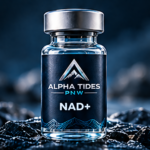
For laboratory research, NAD+ should be sourced from suppliers that make batch-level Certificates of Analysis available for review, rather than suppliers who state a purity figure without documentation behind it. Alpha Tides PNW supplies NAD+ 500MG — 500mg of nicotinamide adenine dinucleotide in lyophilized form — with a third-party Certificate of Analysis on file confirming compound identity and amount for the matching batch. That COA does not include a purity measurement, so researchers should review it directly rather than assume a purity figure not shown on the document; see How to Read a Peptide Certificate of Analysis for guidance on interpreting what a COA does and does not confirm.
Storage recommendations: Store lyophilized NAD+ at -20°C until use. Reconstitute with sterile or bacteriostatic water immediately prior to research use. Avoid repeated freeze-thaw cycles to maintain compound integrity throughout the study duration. See Lyophilization Explained and How to Store Research Compounds Properly for more detail on handling lyophilized material.
Summary: Key Takeaways for Researchers
NAD+ is a central coenzyme in cellular energy metabolism and a required cofactor for sirtuin activity, making it a focal point across aging, metabolic, and DNA-repair research. The essential points are:
- Energy metabolism: NAD+ is an essential coenzyme for mitochondrial energy production via the NAD+/NADH cycle.
- Sirtuin cofactor: its role as a required sirtuin cofactor links it directly to aging biology and metabolic regulation research.
- Age-related decline: preclinical models consistently show NAD+ levels decline with age and can be partially restored.
- Broad relevance: NAD+ has application across metabolic, neurological, cardiovascular, and oncology research models.
- Documentation matters: reviewing the batch-specific Certificate of Analysis — including exactly which tests were performed — is essential for interpreting NAD+ research material responsibly.
Because NAD+ sits at the intersection of energy metabolism and longevity biology, researchers get the most reproducible results by pairing sound experimental design with documentation they have actually verified, rather than a general purity claim.
Related Research Guides
- How to Read a Peptide Certificate of Analysis
- Lyophilization Explained: Freeze-Dried Peptides
- NAD+ 500MG research compound
- 5-Amino-1MQ 50MG research compound
- Certificates of Analysis
- More Compound Research guides
Disclaimer: All products sold by Alpha Tides PNW are intended for laboratory research purposes only. They are not approved for human consumption, veterinary use, or therapeutic application. This article is for educational purposes and does not constitute medical advice.
The compound(s) discussed in this article are available with a Certificate of Analysis on the Alpha Tides shop.
Frequently Asked Questions
NAD+ is studied for its role in mitochondrial energy production, as a required cofactor for sirtuin enzymes, and in DNA-repair pathways involving PARP, with applications spanning aging, metabolic, and oncology research models.
Preclinical studies consistently document a progressive decline in tissue NAD+ concentrations with age across muscle, liver, brain, and adipose tissue, alongside reduced sirtuin activity and mitochondrial function.
NAD+ is the oxidized form and NADH is the reduced form of the same coenzyme; the cycle between them is central to how cells convert nutrients into ATP.
No. The Certificate of Analysis on file for NAD+ 500MG confirms compound identity and amount for the matching batch; it does not include a purity measurement. Researchers should review the COA directly rather than rely on a purity figure not shown on that document.
Store lyophilized NAD+ at -20°C until use, then reconstitute with sterile or bacteriostatic water immediately before use and avoid repeated freeze-thaw cycles.
Yes. NAD+ is frequently incorporated into multi-compound research protocols, though pharmacokinetics and single-compound control groups should be planned carefully to isolate NAD+-specific contributions.
Research Compounds
Research Use Only — Not for Human or Animal Consumption. Content is provided for informational and educational purposes and does not constitute medical advice.
Continue Your Research
Browse the full catalog of COA-verified research compounds.
Shop All Compounds →