

BPC-157 and TB-500 are two of the most-discussed compounds in tissue repair and recovery research. Both have attracted significant scientific interest for these processes — but they work through distinct mechanisms and have different research profiles. This guide breaks down what researchers need to know about each compound, how they differ, and where the current evidence base actually stands.
What Is BPC-157?
BPC-157 (Body Protection Compound-157) is a synthetic pentadecapeptide derived from a protein found in human gastric juice. It consists of 15 amino acids and has been extensively studied in animal models for its effects on tissue repair, angiogenesis, and gut health.
Key areas of BPC-157 research include:
- Tendon and ligament repair — Studies have examined its role in upregulating growth hormone receptors in fibroblasts, potentially accelerating connective tissue healing
- Gastrointestinal protection — BPC-157 has been studied for its cytoprotective effects on the gut lining
- Angiogenesis — Research suggests it may promote the formation of new blood vessels, supporting tissue recovery
- Neurological applications — Preclinical models have explored its interaction with dopaminergic and serotonergic systems
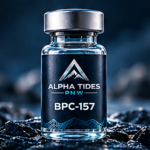
BPC-157 is typically studied in both injectable and oral forms, with research suggesting oral bioavailability — a relatively rare characteristic among compounds. A recent literature and patent review covering BPC-157’s proposed mechanisms and research applications summarizes the current preclinical evidence base in more depth than a single guide can. Alpha Tides PNW supplies BPC-157 10MG as a lyophilized, COA-verified research compound.
What Is TB-500?
TB-500 is a synthetic version of Thymosin Beta-4 (Tβ4), a naturally occurring compound found in virtually all human and animal cells. It plays a key role in actin regulation, which is fundamental to cell structure, migration, and wound healing.
Key areas of TB-500 research include:
- Systemic tissue repair — Because Thymosin Beta-4 is present throughout the body, TB-500 research has focused on its broad regenerative potential across multiple tissue types
- Actin sequestration — TB-500 binds to actin monomers, regulating their polymerization — a critical process in cell motility and repair
- Angiogenesis and inflammation — Like BPC-157, TB-500 has been studied for its role in blood vessel formation and modulating inflammatory response
- Cardiac tissue — Some research has explored Thymosin Beta-4’s role in cardiac repair following injury
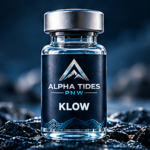
TB-500 is typically studied in injectable form and is noted for its systemic distribution, meaning it may reach tissues throughout the body rather than acting locally. A broader review of therapeutic peptides in orthopaedic and musculoskeletal research, including the actin-regulation pathway TB-500 shares with native Thymosin Beta-4, covers the wider mechanistic context. Alpha Tides PNW does not currently supply TB-500 as a standalone vial — it’s available as one of the four components in the KLOW Recovery Blend, alongside BPC-157, GHK-Cu, and KPV. See the KLOW Blend research guide for the full breakdown of what’s in the stack and why it’s formulated that way.
BPC-157 vs TB-500: Key Differences
The table below summarizes the core distinctions covered above in one reference view — useful for quickly orienting a study design or comparing notes against other published research using either compound.
| BPC-157 | TB-500 | |
|---|---|---|
| Origin | Derived from gastric juice protein | Synthetic version of Thymosin Beta-4 |
| Primary Mechanism | Growth hormone receptor upregulation, angiogenesis | Actin regulation, cell migration |
| Research Focus | Localized tissue repair, GI health | Systemic repair, broad tissue distribution |
| Bioavailability | Oral and injectable studied | Primarily injectable |
| Half-life | Shorter, more localized activity | Longer systemic distribution |
Why the Distinction Matters for Study Design
Because BPC-157 and TB-500 are frequently mentioned together in research discussions, it’s easy to treat them as interchangeable — they aren’t. BPC-157’s proposed mechanism centers on growth hormone receptor upregulation and gastric-derived cytoprotective effects, which is why so much of the literature on it concentrates on gut and connective-tissue models specifically. TB-500’s mechanism, by contrast, runs through actin sequestration — a much more fundamental cell-motility pathway shared across nearly every cell type in the body, which is why its research base spans a wider range of tissue types rather than concentrating on one system.
For a protocol comparing or replicating prior research, this distinction affects everything from which endpoints are relevant to how results from one compound should (or shouldn’t) be expected to generalize to the other. Treating them as a single interchangeable “recovery peptide” category — rather than two compounds with distinct, independently-studied mechanisms — is one of the more common misreadings of this research area.
Complementary Research Applications
One reason both compounds attract ongoing research interest is that their mechanisms appear complementary rather than redundant. BPC-157 tends to show more localized effects — particularly relevant in gut and tendon research — while TB-500’s systemic distribution makes it of interest for broader tissue recovery studies.
Some preclinical protocols have examined both compounds together, based on the hypothesis that their distinct pathways may produce additive effects in tissue repair models. However, research in this area is still developing and largely confined to animal models. This complementary framing is also part of why multi-compound blends exist as a research format — rather than requiring separate sourcing and reconstitution of each compound, a pre-combined blend like KLOW lets a protocol test several mechanistically distinct compounds under one consistent handling process. See our reconstitution guide for the general handling process that applies to both individual compounds and blends.
Important Research Considerations
- Both BPC-157 and TB-500 are research-use-only (RUO) compounds and are not approved for human use by the FDA
- All referenced studies are preclinical — primarily rodent models — and human clinical data is limited
- Purity and third-party verification are critical when sourcing these compounds for research purposes
- Proper storage (typically lyophilized, refrigerated or frozen) is essential to maintain compound integrity
Because both compounds are frequently discussed in the same breath, contaminant and identity risk is worth taking seriously on its own terms rather than assuming a supplier’s claims about one compound apply equally to the other. A supplier’s BPC-157 batch testing well doesn’t tell you anything about the quality of a separately-sourced TB-500 vial — each compound (or, in the case of a blend, each component) should have its own independent verification rather than a single blanket purity claim covering the whole product line.
Alpha Tides PNW supplies BPC-157 10MG as a lyophilized research compound — independently HPLC/Janoshik tested with COAs available for select products. Review the COA library for batch documentation, or read more about our sourcing and testing standards. Questions about a specific batch can go through our contact page.
Related Research Guides
- KLOW Blend: A Multi-Compound Research Formula for Recovery Studies — the multi-compound blend that includes both BPC-157 and TB-500
- Deadpool Stack — a three-compound research blend combining BPC-157, TB-500, and Cartalax in a single vial
- How to Evaluate Third-Party Tested Research Materials — what a real Certificate of Analysis should show
Continue exploring at the Alpha Tides Research Hub, or browse the full research compound shop.
Storage & Handling
Both compounds follow standard lyophilized-peptide storage rules: keep the lyophilized vial at -20°C protected from light until ready to reconstitute. Once reconstituted with bacteriostatic water, refrigerate at 4°C and use within the 2–4 week window typical for this compound class, aliquoting into single-use portions before freezing if longer storage is needed. Full compound-specific guidance, including notes on BPC-157 and the KLOW blend specifically, is covered in our complete storage guide.
The compound(s) discussed in this article are available with a Certificate of Analysis on the Alpha Tides shop.
Frequently Asked Questions
Neither is categorically "better" — they're studied for overlapping but distinct purposes. BPC-157's research base leans toward localized gut and connective-tissue effects with oral bioavailability as a notable feature; TB-500's actin-regulation mechanism is studied for more systemic tissue distribution. Which is more relevant depends entirely on what a given protocol is designed to investigate.
Some preclinical protocols have examined both together on the hypothesis that their distinct mechanisms could produce additive effects, and pre-combined blends such as KLOW exist for exactly this kind of multi-compound research design. This remains an active, developing area rather than settled science.
Not exactly. Thymosin Beta-4 (Tβ4) is the full, naturally occurring 43-amino-acid protein. TB-500 refers to a shorter synthetic peptide based on Tβ4's active actin-binding region, developed as a more stable research tool that retains the mechanism of interest without requiring the full native protein.
Look for a supplier that provides a batch-specific Certificate of Analysis from an independent third-party lab, not just a generic purity claim. See our guide on how to evaluate third-party testing for what a legitimate COA should actually show.
Research Compounds
Research Use Only — Not for Human or Animal Consumption. Content is provided for informational and educational purposes and does not constitute medical advice.
Continue Your Research
Browse the full catalog of COA-verified research compounds.
Shop All Compounds →
One Response